
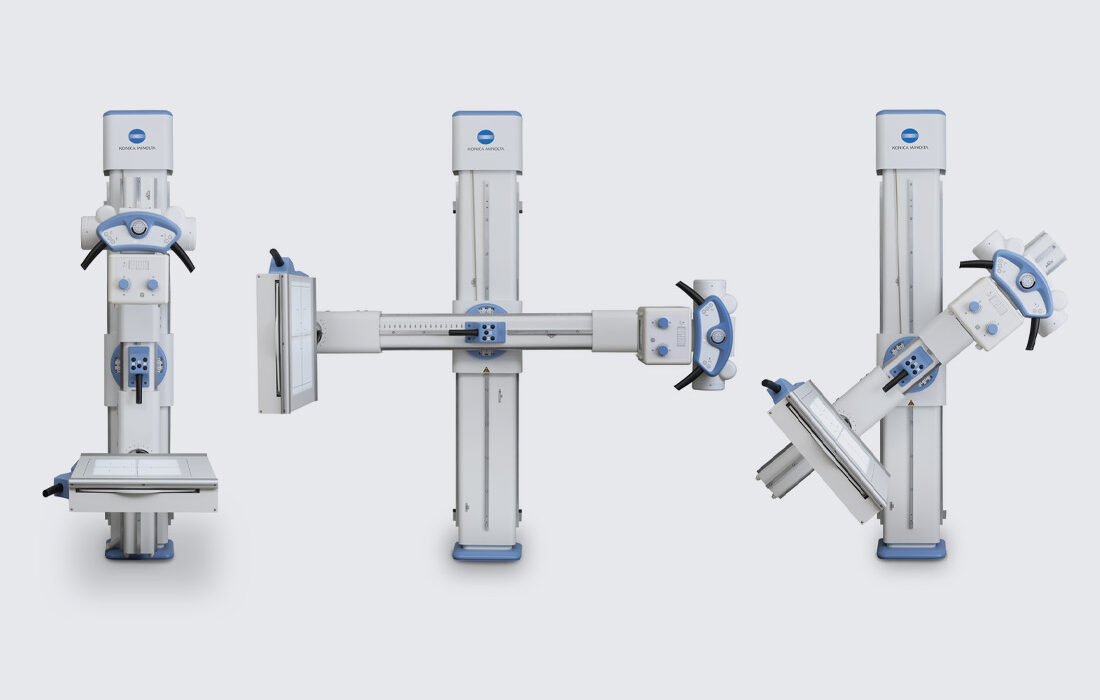
Chiropractic X-Ray Machines for Sale: Digital X-Ray Buyer’s Guide
Choosing a chiropractic X-ray machine for sale requires more than comparing equipment prices. A complete digital X-ray project may include the generator, tube and positioning system, DR detector, acquisition computer, image-processing software, PACS connectivity, room planning, shielding evaluation, installation, calibration, staff training, warranty, and ongoing technical support.
The right system should match the examinations you perform, your patient population, available room dimensions, daily imaging volume, preferred workflow, and applicable state requirements. A system that works well for a low-volume startup may not be the best choice for a busy multi-provider practice or a clinic that routinely performs demanding lateral lumbar examinations.
The short answer: Start with your clinical applications and room—not with a product brochure. Then select the generator, positioning system, detector, and software that can support those requirements. Before purchasing, confirm the complete installed price, regulatory steps, warranty coverage, training, integration, and service response.
What Is Included in a Chiropractic Digital X-Ray System?
A chiropractic digital X-ray system normally includes several connected components:
- X-ray generator and tube
- Tube and detector positioning system
- Digital radiography detector
- Detector holder, wall stand, or integrated receptor
- Acquisition workstation and display
- Image-processing software
- DICOM and PACS connectivity
- Exposure controls and required safety components
- Installation, testing, calibration, and training
Some quotes include only the major hardware. Others include a complete installed workflow. Before comparing prices, confirm exactly which components, licenses, accessories, and services are included.
KnovelTech offers digital X-ray systems for chiropractic and other medical practices, including portable and stationary configurations.
Types of Chiropractic X-Ray Machines
Straight-Arm X-Ray Systems
A straight-arm system keeps the X-ray tube and detector aligned on opposite ends of a mechanical arm. The assembly moves vertically to support standing examinations at different anatomical levels.
This design can provide a compact, repeatable workflow for chiropractic practices that primarily perform upright spinal and extremity imaging. Some configurations support fixed source-to-image distances, such as 40 or 72 inches, depending on the equipment and clinical requirements.
Straight-arm systems can reduce the need for separate floor and wall tracks, but buyers must verify the vertical travel, detector coverage, patient access, room clearances, and examinations supported by the proposed model.
U-Arm X-Ray Systems
A U-arm system also maintains alignment between the tube and detector while allowing the assembly to move around the patient. Depending on the design, it may support upright, seated, and selected table examinations.
U-arm systems can be useful for practices that want an integrated detector and structured positioning workflow. The required floor space, ceiling height, movement envelope, electrical service, and installation method should be reviewed before purchase.
Explore KnovelTech’s U-arm and straight-arm X-ray systems when comparing stationary configurations.
Traditional Radiographic Rooms
A conventional radiographic room may include a ceiling- or floor-mounted tube stand, wall bucky, and radiographic table. This configuration can support a broad range of examinations and higher-volume workflows, but it generally requires more room and a more involved installation.
Portable Digital X-Ray
Some chiropractic practices may be candidates for a portable digital system. Portable equipment can reduce the permanent footprint and provide flexible positioning, but generator capability, detector alignment, accessories, room suitability, and state requirements must be evaluated carefully.
Portable X-ray is not automatically the best or least expensive solution. Practices that frequently image larger patients or perform demanding lateral projections should compare representative images and generator capabilities before deciding.
KnovelTech’s portable X-ray systems provide an alternative for practices prioritizing compact equipment and flexible positioning.
Start With Your Chiropractic Examination List
Create a list of the examinations you expect to perform now and during the next several years. Common considerations include:
- Cervical spine
- Thoracic spine
- Lumbar spine
- Pelvis and sacroiliac joints
- Upper and lower extremities
- Weight-bearing examinations
- AP, PA, lateral, and oblique projections
- Scoliosis or long-length imaging requirements
- Chest or abdomen examinations, when applicable to the practice’s permitted clinical use
This list influences generator capability, detector size, source-to-image distance, vertical travel, positioning accessories, room layout, and software protocols.
Ask the vendor to demonstrate representative chiropractic examinations. For larger patients or demanding lateral views, review images obtained under conditions comparable to your practice. A small-extremity demonstration alone does not establish that the system fits your complete workload.
Generator Capability and Patient Population
The generator must provide an appropriate range of exposure techniques for the anatomy and patient sizes you expect to image. Important factors include:
- Generator power and output range
- Available kV and mA settings
- Exposure-time options
- Focal spot and tube specifications
- Duty cycle and heat capacity
- Electrical requirements
- Compatibility with the selected detector and controls
- Serviceability and replacement-part availability
Higher-BMI patients and thicker anatomy can require greater exposure capability, especially for lateral lumbar, pelvis, chest, or abdomen imaging. Image processing cannot compensate for every limitation in the original acquisition.
Avoid choosing a system from a single power rating. Image quality also depends on the DR detector, grid, distance, collimation, positioning, exposure technique, software processing, and operator training.
Choosing a DR Detector
The digital radiography detector captures the X-ray image and sends it to the acquisition workstation. Detector selection affects positioning, anatomy coverage, handling, workflow, and replacement cost.
14 × 17-Inch DR Detector
A 14 × 17-inch detector is a common general-radiography format. Wireless and tethered versions may be available. It can be practical for chiropractic practices that need flexible positioning and a detector that can be moved between an upright stand and table.
17 × 17-Inch DR Detector
A 17 × 17-inch detector provides a square imaging area. In some workflows, this reduces the need to rotate the panel between portrait and landscape orientations. It may be installed as a fixed detector or offered in a portable design, depending on the system.
Additional Detector Considerations
Compare:
- Wireless, tethered, or fixed operation
- Detector weight and dimensions
- Pixel pitch and image-processing performance
- Battery and charging workflow
- Water and dust resistance
- Impact protection
- Grid compatibility
- Warranty and accidental-damage coverage
- Repair and replacement turnaround
Detector size alone does not determine image quality. The detector and processing software must be configured for the practice’s clinical applications.
Review KnovelTech’s flat-panel DR solutions for available detector formats and digital upgrade options.
Weight-Bearing and Spine Imaging Workflow
Many chiropractic practices require upright, weight-bearing imaging. The system should allow repeatable positioning for the intended cervical, thoracic, lumbar, pelvis, and extremity views.
Evaluate:
- Detector height and vertical travel
- Tube and detector alignment
- Patient access and stability
- Source-to-image distance options
- AP, lateral, and oblique positioning
- Space for the patient and operator
- Ability to accommodate taller and shorter patients
- Grid use and alignment
- Long-length or stitching requirements
Integrated straight-arm and U-arm systems can simplify alignment because the tube and detector move together. A portable system may require separate generator and detector stands, making setup and staff training especially important.
The best demonstration is one that reproduces your normal examinations. Ask the vendor to show how the staff will position the patient, adjust the system, select the technique, review the image, and send it to storage.
Room Size and Layout
There is no universal room size that works for every chiropractic X-ray system. The required space depends on the selected equipment, source-to-image distance, system movement, patient positioning, primary beam directions, operator location, and regulatory requirements.
Before ordering equipment, prepare a dimensioned room drawing that identifies:
- Room length, width, and ceiling height
- Doors, windows, and structural columns
- Wall, floor, and ceiling construction
- Adjacent rooms and occupancy
- Electrical outlets and network connections
- Planned generator and detector positions
- Patient and operator locations
- Primary beam directions
- Storage for detectors and positioning accessories
Do not rely only on the manufacturer’s equipment dimensions. The room must support the complete movement and examination workflow.
KnovelTech can review room dimensions and equipment options before a final configuration is selected.
Electrical and Installation Requirements
Stationary X-ray systems may require dedicated electrical service, disconnects, grounding, conduit, or other preparation. The exact requirements depend on the generator and local electrical code.
The installation plan should identify:
- Required voltage, phase, amperage, and frequency
- Dedicated circuit and disconnect requirements
- Generator and control locations
- Cable routing and conduit
- Network connections
- Equipment anchoring
- Delivery path and room access
- Installation and calibration schedule
Electrical work should be completed from the approved equipment specifications, not from assumptions based on another X-ray system.
Shielding, Registration, and Radiation Safety
X-ray equipment and facilities are regulated. Requirements vary by state and may include equipment registration, facility approval, shielding evaluation, operator qualifications, inspections, radiation surveys, quality assurance, and recordkeeping.
A qualified medical physicist or other authorized radiation-safety professional may need to review the room, expected workload, primary beam directions, adjacent occupancy, and construction materials. Shielding decisions should be completed before remodeling or installation.
Portable equipment is not automatically exempt from these requirements. Confirm the proposed system and operating method with the appropriate state radiation-control program.
The Conference of Radiation Control Program Directors maintains a directory of state radiation-control programs. The FDA’s medical X-ray imaging information also explains federal medical-device and radiation-safety performance requirements for diagnostic X-ray equipment.
Practices should follow the ALARA principle—as low as reasonably achievable—while maintaining the image quality required for the clinical purpose. Appropriate examination selection, collimation, positioning, technique, distance, shielding where required, and retake reduction are essential.
Acquisition Software, DICOM, and PACS
The acquisition software controls the digital imaging workflow. It should allow authorized staff to select or enter patient information, choose the examination, acquire and process images, apply annotations, review image quality, and send the study to storage.
Before purchasing, confirm:
- Which image-processing software is included
- Whether chiropractic exam protocols are configured
- Whether DICOM storage is supported
- Whether DICOM Modality Worklist is required
- How the system connects to your PACS
- How prior studies are accessed
- Whether image stitching is required
- How images are backed up
- Which integrations and licenses are included
- Who is responsible for network and cybersecurity configuration
KnovelTech’s KnovelView acquisition software can be configured as part of a chiropractic digital X-ray workflow. Compatibility with third-party PACS, EMR, and network systems should be confirmed before installation.
New vs. Refurbished Chiropractic X-Ray Equipment
New systems may offer current technology, full manufacturer warranty coverage, predictable parts availability, and a longer expected service life. Refurbished systems may reduce the initial cost but require a careful review of age, condition, service history, parts availability, software compatibility, and warranty.
When evaluating refurbished equipment, ask:
- What year was each major component manufactured?
- Who inspected and refurbished the equipment?
- What testing and calibration documentation is provided?
- Which components are covered by warranty?
- Are replacement parts still available?
- Can the system integrate with current DR and software?
- Are installation and state documentation included?
- What is the expected remaining service life?
A low purchase price can become expensive if the system requires immediate repairs, lacks compatible parts, or cannot support the desired digital workflow.
How Much Does a Chiropractic X-Ray Machine Cost?
The cost depends on the complete configuration. Major pricing factors include:
- New or refurbished equipment
- Generator capability
- Straight-arm, U-arm, portable, or traditional-room design
- DR detector size and technology
- Fixed, tethered, or wireless detector
- Acquisition workstation and display
- Image-processing and DICOM software
- PACS integration
- Positioning accessories
- Shipping and installation
- Electrical and room preparation
- Physicist and shielding services
- Testing and calibration
- Training
- Warranty and service coverage
Request an itemized quote and identify exclusions. Sales tax, freight, electrical work, shielding construction, permits, registration fees, physicist services, integration, and recurring software costs may not be included in every proposal.
Compare the total installed project cost—not only the hardware price.
Financing a Chiropractic X-Ray System
Financing may allow a practice to preserve working capital and align equipment payments with business operations. Available terms depend on the borrower, equipment, lender, and transaction.
Before accepting financing, review:
- Down payment
- Monthly payment
- Term length
- Interest rate or finance charge
- Documentation fees
- Early-payment provisions
- Insurance requirements
- Total amount paid over the term
- Whether installation and accessories can be included
Ask for a complete equipment proposal before finalizing the financing application so the financed amount reflects the system the practice actually needs.
Installation, Calibration, and Training
A complete project should define responsibilities before delivery. Ask who will perform or coordinate:
- Room and installation review
- Equipment delivery and assembly
- Electrical verification
- System installation and anchoring
- Detector and software configuration
- Generator integration
- Acceptance testing and calibration
- Radiation survey, when required
- PACS and DICOM setup
- Staff application training
- State documentation support
- Post-installation technical support
Training should cover positioning, exposure selection, collimation, detector handling, image processing, rejected-image review, PACS workflow, and routine system care.
Warranty and Long-Term Support
Different components may have different warranties. The generator, tube, detector, workstation, software, and positioning system may not all share the same coverage period.
Confirm:
- Parts and labor coverage
- X-ray tube coverage and any prorated terms
- DR detector warranty
- Accidental-damage exclusions
- Computer and software support
- Remote and onsite service availability
- Travel and freight charges
- Preventive-maintenance requirements
- Expected response time
- Availability of replacement parts or loaner equipment
The vendor’s ability to install, integrate, and support the complete system can be as important as the equipment brand.
Questions to Ask Before Purchasing
- Which system configuration fits my examinations and patient population?
- Can I review representative chiropractic images, including lateral lumbar views?
- Will the equipment fit my room and support my positioning workflow?
- What generator, detector, stand, workstation, and software are included?
- Which installation, calibration, physicist, and regulatory services are included?
- Can the system connect to my existing PACS or practice workflow?
- What training is provided before and after go-live?
- What are the separate warranties for each major component?
- Who provides service, and how quickly is support available?
- What is the complete installed price, including recurring costs?
Why Buy Your Chiropractic X-Ray System From KnovelTech?
KnovelTech provides more than equipment shipment. With more than 25 years of diagnostic imaging experience, the company can help practices manage the complete project from initial planning through ongoing support.
Services may include:
- Clinical application and equipment selection
- Room-layout review
- Physicist and shielding coordination
- Electrical and installation specifications
- Generator and DR detector integration
- Acquisition software and PACS connectivity
- Installation, testing, and calibration
- Staff application training
- Remote and onsite technical support
- Financing coordination
KnovelTech offers portable systems, straight-arm and U-arm configurations, DR detectors, acquisition software, PACS solutions, and related services for chiropractic practices nationwide.
Request a Chiropractic X-Ray Quote
Prepare your room dimensions, examination list, expected patient volume, typical patient population, desired opening date, and current software or PACS information.
Contact KnovelTech to request a chiropractic X-ray quote or schedule a virtual demonstration. A specialist can compare system configurations and help develop a complete project plan for your practice.
Frequently Asked Questions
What is the best X-ray machine for a chiropractic office?
The best system depends on examinations, patient size, imaging volume, room dimensions, positioning needs, budget, and state requirements. Straight-arm and U-arm systems are common stationary options, while some practices may be candidates for portable digital X-ray.
How much space does a chiropractic X-ray room require?
There is no universal minimum. Required space depends on the equipment dimensions, movement envelope, source-to-image distance, patient positioning, operator location, primary beam directions, and applicable regulations. Obtain a site-specific review before purchasing.
What is a straight-arm X-ray system?
A straight-arm system places the tube and detector at opposite ends of a mechanical arm, keeping them aligned as the assembly moves vertically. It can provide a compact workflow for upright examinations.
Should I choose a 14 × 17 or 17 × 17 DR detector?
A 14 × 17 detector is common and can be easier to handle. A 17 × 17 detector offers a square imaging area that may reduce detector rotation. The decision should also consider mounting, portability, durability, warranty, and cost.
Can a chiropractic X-ray system connect to PACS?
Yes, when the acquisition software and PACS support compatible DICOM services and are properly configured. Confirm required licenses, worklist needs, network settings, security, and integration responsibilities before purchase.
What is involved in installing a chiropractic X-ray room?
Installation may include room planning, shielding evaluation, electrical preparation, delivery, equipment assembly and anchoring, detector and software configuration, testing, calibration, registration, inspection, PACS integration, and staff training.
Should I buy new or refurbished chiropractic X-ray equipment?
New equipment generally offers current technology and stronger warranty coverage. Refurbished equipment may reduce the purchase price but requires careful evaluation of age, condition, service history, parts availability, software compatibility, and warranty.